The Old Ideas on How to Achieve Financial Freedom Don't Work -- Here's What Does
You can achieve financial freedom many years sooner than you have ever thought possible.
The first thing you need to do is to abandon Buy-and-Hold investing. Buy-and-Hold started out as a good idea. It was the first research-based strategy and rooting your strategy in research is key because the confidence that comes from following a research-based strategy will help you to stick with the strategy for the long term.
The problem is that Buy-and-Hold was developed in the late 1960s and early 1970s, before all of the important questions had been carefully researched. Research done in more recent years shows that Buy-and-Hold is actually the worst of all possible strategies.
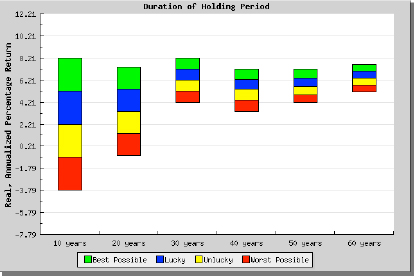
It is critical that you lower your stock allocation when prices reach insanely high levels, as they did in the late 1990s. The research now shows that those who fail to do so always suffer wipeouts of most of the accumulated wealth of a lifetime. When prices get as high as they got in the late 1990s, we see 20 years of poor returns before the market is able to head upward again.
The better and safer investing strategy is Valuation-Informed Indexing.
Valuation-Informed Indexers go with high stock allocations when stocks are priced to provide outstanding long-term returns, moderate stocks allocations when stocks are priced to provide good long-term returns and low sock allocations when stocks are priced to provide poor long-term returns. The research shows that those following a Valuation-Informed Indexing strategy achieve far higher returns at greatly reduced risk and should expect to achieve financial freedom five to ten years sooner than they could following a Buy-and-Hold strategy.
Please start your investigation of Valuation-Informed Indexing by checking out the research done by Wade Pfau, Associate Professor of Economics at the Graduate Institute for Policy Studies, showing that Valuation-Informed Indexing beat Buy-and-Hold in 102 of the 110 rolling 30-year time-periods now in the historical record.
I then suggest you go to the People Are Talking section of the home page of my A Rich Life blog (it’s on the left-hand side of the page, near the top) to see the 100-plus endorsements of my work by both big-name experts and ordinary investors and savers put forward there.
Finally, please go to the About section of the blog, where I provide links to the essential materials you need to review to understand why Buy-and-Hold failed and how I came to develop the superior approach (with the help of numerous experts, including many Buy-and-Holders, and hundreds of ordinary people providing feedback at scores of investing discussion boards and blogs).
It’s not only the conventional investing advice that is holding back your efforts to achieve financial freedom early in life. The conventional saving advice is no great shakes either!
You have probably heard experts in this field admonish you and all the rest of us for failing to save effectively. We are told we lack willpower. I find this insulting. We all hold jobs and educate ourselves and raise families and do all the rest that comes with living a middle-class life. How do we do all that hard stuff without willpower? I don’t buy the conventional explanation of why we don’t save. It doesn’t add up.
The real problem is that the saving goal we are told to pursue -- an old-age retirement -- does not provide the ongoing motivation needed to fuel an effective saving effort. The best savers in the world save to achieve saving goals that can be achieved within five years and that are of intense personal concern to them. You need to start saving not for the boring goal of being able to retire when you are old and gray but to open up freedoms and opportunities that you can enjoy in your 20s and 30s and 40s and 50s.
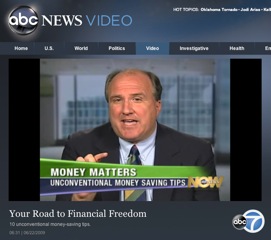
Do that, and you will soon find yourself saving enough that you will have no trouble financing an old-age retirement when the time comes for it. Please check out the interview I did with ABC News to gain a better sense of what the money management advice put forward at this site is all about.
Please feel free to write me with any questions (see the “All About Rob” link on the left-hand side of this page). I love hearing from those seeking to learn about exciting new saving and investing strategies. I wish you the best of luck in your efforts finally to begin serious efforts to achieve financial freedom early in life!
- A Rich Life - Personal Finance for Liberal Arts Graduates
- Daily Updates on Winning Financial Freedom to Do the Work You Love.
- Money Management Advice -- What's Here and Not Elsewhere
- New money management advice developed by the best savers and investors in the world.
- Ten Unconventional Saving Money Tips
- Saving money tips featured on ABC News and the Lifehacker.com site.
- Getting Fired -- Something Dies and Something Is Born
- Getting fired requires that you face hard truths and build a strong new Life Plan.
- Ten Reasons for Paying Off the Mortgage Early
- Is paying off the mortgage early an idea you have considered from time to time? Paying off the mortgage is a better idea than many money advisrors suggest. Here are 10 reasons why it makes sense.
- Stock Valuation and Predicting Stock Returns
- The Stock-Return Predictor shows the effect of changes in stock valuation when predicting stock returns.
- Retirement Planning Calculator
- The Retirement Risk Evaluator is the first retirement planning calculator to consider the effect of valuations on the survival of a stock portfolio.
- Portfolio Allocation Shocker -- Timing Beats Rebalancing!
- Long-term investors need to change their portfolio allocation in response to big price swings, our new calculator shows.
- The Stock Investment Strategy Tester -- A Unique Calculator
- The Stock Investment Strategy Tester is a unique calculator that shows you how to reduce stock risk while increasing long-term returns.
- A Stock Cycles Calculator -- The Returns Sequence Reality Checker
- The Returns Sequence Reality Checker is a stock cycles calculator that identifies the stock-return patterns that yield the best long-term results for investors.
- The Coming Revolution in Stock Market Investing Advice
- Stock market investing advice needs to change to reflect new findings in the academic research.
- Stock Market Investment Research and the Tricky Tricks Used to Trick You
- Stock market Investment research parades as science, but much of it is better described as science fiction.
- Safe Investing
- Recent research points the way to safe investing approaches rarely mentioned by experts with ties to The Stock-Selling Industry.
- Pros and Cons of Index Investing
- Index investing makes sense, but stock allocations should be lowered when valuations get too high.
- Stock Market Timing Strategies -- What Works and What Doesn't
- Valuation-based stock market timing works in the long term but not in the short term.
- Six Unconventional Mid-Life Career Change Tips
- The key to a successful mid-life career change is building a financial cushion before taking the leap.
- 8 Paths to Financial Independence
- Brief descriptions of the financial independence visions of Orman, Kiyosaki, Dacyczyn, Dominguez, Greaney, Terhorst, Robbins, and Bennett.
- John Bogle's Big Mistake
- John Bogle made a big mistake in his development of the indexing concept, one likely to cost his followers millions.
- What You Must Know About Irrational Exuberance
- A “cheat sheet” of 10 key insights explored in <i>Irrational Exuberance.</i>
- What Is It With This Rob Bennett Individual Anyway?
- Rob Bennett is the world's first stand-up personal finance advisor who offers asset-allocation strategies you can dance to.